If you have ever paused mid-sentence wondering whether to write “heros” or “heroes,” you are not alone. This is one of the most common spelling mix-ups in English, and the answer is simpler than it looks.
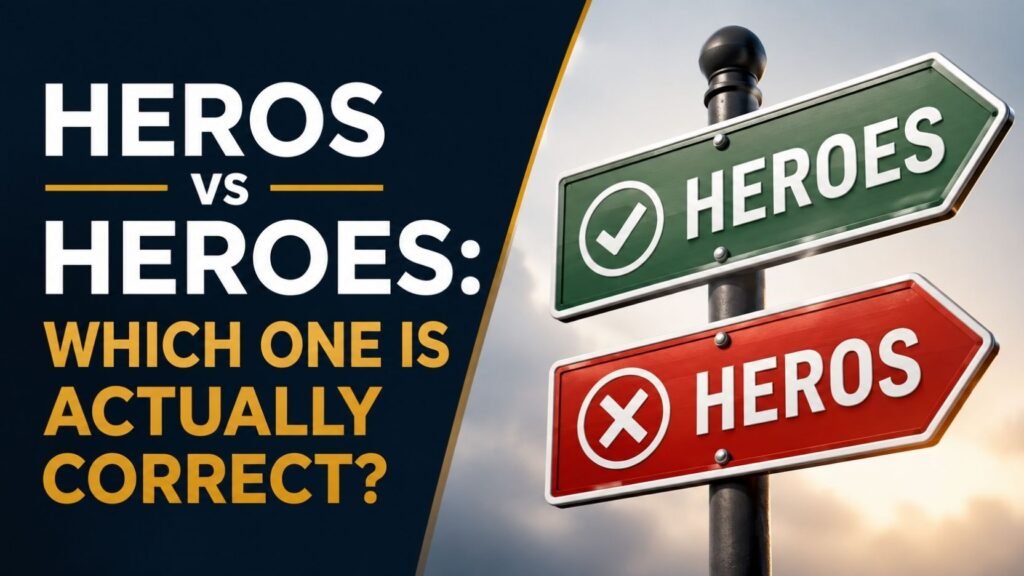
The correct plural of “hero” is heroes, spelled with an “e” before the “s.” “Heros” is a spelling mistake in almost every everyday context, though it does show up as a proper noun in a few specific places, like brand names or fictional titles. For nearly all writing, if you mean more than one hero, you want heroes.
This mix-up trips people up because English plurals do not follow one single rule. Some words ending in “o” just add “s,” while others add “es.” Hero happens to fall into the second group, and that is exactly where the confusion starts. Getting it right matters for resumes, essays, emails, and everyday writing, since a small spelling slip like this can stand out to careful readers.
The Simple Answer
Heroes is the correct plural form of hero in standard English. It is the spelling used by every major dictionary, including Merriam-Webster, Oxford, and Cambridge. Whether you are talking about firefighters, comic book characters, or the heroes of a novel, this is the spelling to use.
Heros is not a standard English plural. It appears almost exclusively as:
- A proper noun or brand name (for example, the sandwich chain Blimpie once used “hero” style naming, and some regional deli brands spell “hero” sandwiches without pluralizing them the standard way)
- A stylized title choice made by a company, game, or media property
- A simple typo
Outside of those narrow cases, “heros” is considered incorrect.
See More: Cosy Or Cozy
Why Hero Becomes Heroes: The Grammar Rule
English has a general rule for nouns that end in a consonant plus “o”: add “es” to form the plural.
| Singular | Plural | Pattern |
| Hero | Heroes | Consonant + o → add “es” |
| Potato | Potatoes | Consonant + o → add “es” |
| Tomato | Tomatoes | Consonant + o → add “es” |
| Echo | Echoes | Consonant + o → add “es” |
Compare that with nouns ending in a vowel plus “o,” which usually just add “s”:
| Singular | Plural | Pattern |
| Radio | Radios | Vowel + o → add “s” |
| Video | Videos | Vowel + o → add “s” |
| Studio | Studios | Vowel + o → add “s” |
Hero ends in a consonant (“r”) followed by “o,” so it follows the “add es” pattern, just like potato and tomato. This is the core reason heroes is correct and heros is not.
A quick note on exceptions: English plurals for “o” words are not perfectly consistent. Words like piano, photo, and logo (all consonant + o) only add “s” (pianos, photos, logos), often because they are borrowed from Italian, Spanish, or are shortened forms. Hero does not fall into that exception group. Its accepted plural has always been heroes.
Heros vs Heroes: Quick Comparison
| Term | Correct? | When You’d See It |
| Heroes | ✅ Always correct | Standard plural of hero, in any context |
| Heros | ❌ Incorrect as a plural | Only valid as a proper noun, brand name, or stylized title |
Common Mistakes
Incorrect: The firefighters were true heros that day.
Correct: The firefighters were true heroes that day.
Incorrect: My favorite super heros are Batman and Spider-Man.
Correct: My favorite superheroes are Batman and Spider-Man.
💡 Tip: If you are ever unsure, try substituting a simpler consonant + o word you already know is correct, like “potatoes.” If “potatos” looks wrong to you, “heros” should too. The same rule applies to both.
Superhero or Super Hero?
Many searches for “super heros” are really asking about the word “superhero” itself. In modern English, superhero is typically written as one word, and its plural is superheroes, not “super heros” or “superheros.”
- Singular: superhero
- Plural: superheroes
This follows the exact same consonant + o rule as hero, since “superhero” simply has hero built into it.
The Hero’s Journey (Possessive, Not Plural)
A related source of confusion is the phrase “the hero’s journey,” a term popularized by scholar Joseph Campbell to describe a common narrative structure found in myths and stories worldwide, where a central character leaves the ordinary world, faces trials, and returns transformed.
Note the apostrophe placement:
| Form | Meaning | Example |
| Hero’s | Singular possessive (belonging to one hero) | The hero’s sword was legendary. |
| Heroes’ | Plural possessive (belonging to multiple heroes) | The heroes’ shields lined the wall. |
| Heroes | Plain plural, no possession | Three heroes stood at the gate. |
This is a separate issue from “heros vs heroes,” but the two get searched together often enough that it is worth clarifying. “The heros journey” (with no apostrophe) is a misspelling; the standard form is “the hero’s journey.”
Where “Heros” as a Word Does Legitimately Appear
It is worth acknowledging that “Heros” (often capitalized) shows up as an intentional, non-grammatical spelling in various brand names, game titles, and media properties, where companies choose stylized spellings for trademark or branding reasons rather than for grammatical correctness. Examples of this pattern include certain sandwich shop names, game titles, and franchise branding that use “Hero” or “Heros” without the standard plural ending, purely as a stylistic or trademark choice.
When you see “Heros” used this way, it is a proper noun or brand name, and it follows the styling that company chose rather than standard English plural rules. This does not make “heros” correct as a general plural of hero; it simply means that specific name exists as its own trademarked or stylized word.
⚠️ Common mistake: Seeing a brand or title spelled “Heros” and assuming that spelling is also correct for everyday plural use. It is not. Brand names and trademarks are exempt from standard grammar rules; regular writing is not.
See More: Scared Or Scarred
Pronunciation
Both “hero” and “heroes” are pronounced the same way at the start, with the added syllable at the end for the plural:
- Hero: HEER-oh
- Heroes: HEER-ohz
The spelling difference between heros and heroes does not change how the word sounds, which is part of why the misspelling is so easy to make. Since English speakers hear “HEER-ohz” and simply add the letters they associate with a plural, some default to just adding “s” instead of the correct “es.”
Origin Of The Word Hero
“Hero” entered English from Latin “heros,” which itself came from the ancient Greek word “hērōs” (ἥρως), referring to a warrior or protector, often one with divine ancestry or extraordinary courage, celebrated in Greek mythology and epic poetry.
Interestingly, the Latin source word was itself spelled “heros” in its original Latin singular form. English borrowed the word and, over time, adapted it to fit standard English plural patterns, turning “hero” into the modern singular and “heroes” into the modern plural. This bit of history explains why “heros” looks so plausible to English speakers: it genuinely was the correct singular form in Latin, even though it is not the correct English plural today.
Similar Words That Follow the Same Pattern
If the hero and heroes distinction makes sense to you, the same logic applies to these common words:
| Singular | Plural |
| Tomato | Tomatoes |
| Potato | Potatoes |
| Echo | Echoes |
| Volcano | Volcanoes (also accepted: volcanos) |
| Torpedo | Torpedoes |
Recognizing this pattern can help you avoid similar mistakes elsewhere in your writing.
See More: Miss Vs Misses
Frequently Asked Questions
Is it heros or heroes?
Heroes is the correct standard English plural of hero. Heros is not a standard plural and is considered a spelling mistake outside of specific brand or trademark uses.
What is the plural of hero?
The plural of hero is heroes, formed by adding “es” because hero ends in a consonant followed by “o.”
Why does hero become heroes and not heros?
English nouns ending in a consonant plus “o,” such as hero, potato, and tomato, typically form their plural by adding “es” rather than just “s.”
Is superheros a word?
No. The correct plural is superheroes, following the same rule as hero, since superhero contains the word hero.
Is heros ever correct?
Only as a proper noun, brand name, or stylized title chosen by a company or media property. As a standard plural noun, it is incorrect.
How do you spell more than one hero?
You spell it heroes, with an “e” before the final “s.”
Is hero’s journey spelled with an apostrophe?
Yes. “The hero’s journey” uses a possessive apostrophe before the “s” because it refers to the journey belonging to one hero.
What language does the word hero come from?
Hero comes from Latin “heros,” which came from the ancient Greek word “hērōs,” meaning a warrior or protector of extraordinary courage.
Do British and American English spell heroes differently?
No. Both British and American English use “heroes” as the standard plural. There is no regional variation on this particular spelling.
Is heroes a noun?
Yes. Heroes is the plural form of the noun hero, referring to more than one person admired for courage, achievement, or noble qualities.
Final Thoughts
The difference between heros and heroes comes down to one small but important spelling rule: hero ends in a consonant plus “o,” and words that follow that pattern take “es” in the plural, not just “s.” Heroes is the spelling supported by every major dictionary and used correctly in books, journalism, and everyday writing.
If you remember that hero follows the same pattern as potato and tomato, you will spell it correctly every time. Save “Heros” for the rare cases where it appears as someone’s brand name or trademark, and use heroes everywhere else, whether you are writing about firefighters, fictional characters, or the heroes in your own life.

Abdul Rehman Jutt is the author behind Grammar Wordz, with 4 years of experience researching and writing about English grammar, words, meanings, and language rules. Their goal is to make grammar simple, clear, and easy to understand through accurate and useful explanations.